

We believe a company should give back to society part of what it receives from it. That is why we have collaborated with Fundació Arcadi at the sixth Nit Bufona: cystic fibrosis research moves forward when people and companies decide to join in.
A night at the Palau de Fires
More than 600 people filled the Palau de Fires in Girona on 15 October for the sixth Nit Bufona, the charity dinner gala that the Fundació Arcadi Armangué Barceló has held since 2019 to raise funds for cystic fibrosis research. A room dressed in blue, with a long central table running all the way to the stage, brought together companies, sponsors, volunteers, families and friends of the foundation around an idea the foundation always comes back to: research means progress, and research means hope.
The evening was hosted by journalists Marta Bosch, Xavi Coral and Raquel Sans, and dinner was cooked jointly by El Celler de Can Roca and Nandu Jubany, who between them hold four Michelin stars: fine dining in the service of a cause. One of the most special moments came when the whole room blew soap bubbles at once. They are the foundation's symbol, and the gesture sums up the meaning of the night: every breath gives strength to keep researching.
The funds raised go to research: projects at the Hospital Josep Trueta and the Girona Biomedical Research Institute (IDIBGI).
Among those who spoke from the lectern were Arcadi Armangué, the foundation's president; Pilar Barceló, its driving force; their son Arcadi; and other people who live with the disease up close. They were deeply moving speeches. onext was there, as a supporter of the foundation.

What cystic fibrosis is
It is an inherited, chronic and degenerative disease caused by an alteration in the CFTR gene, which regulates the movement of salt and water in cells; the result is thick mucus that mainly affects the lungs and pancreas. Fundació Arcadi puts its incidence in Catalonia at one in every 5,600 births, about 20 new cases a year, and notes that there is no definitive cure. In Spain, the Spanish Cystic Fibrosis Registry followed 2,667 people in 2023.
Why now
For years, the question about cystic fibrosis was how much could be relieved. Since drugs exist that act on the defective protein and not only on its symptoms —the triple combination was authorised in the European Union in 2020— the question has changed: it is no longer whether research works, but who is left out of its results and how long it takes to reach each person. There is a solid scientific base, a path that has improved the lives of many people, and still people and countries that do not reach it. For an AI company, the lesson is simple: technology is not an end. AI has to help improve people's lives, and that is shown in what is done with it and also in what is contributed outside it. That is why our role here is not to do research —onext does not do medical research and does not claim to— but to join those who do and support them with a concrete decision.
What has already changed
Three dates and one figure, each with its source:
The same review also reports a projection, not an observed figure: in people with two copies of F508del, a model estimates a median survival of 71.6 years on the triple combination. The authors themselves warn about the limits of registries: observational design, missing data and short follow-up.
What is missing
The review also points to the gap. Of an estimated 162,428 people with cystic fibrosis in 94 countries, only 12% were receiving the triple combination (Guo and colleagues, cited in the review). And not every mutation responds: the EMA states that people with two class I mutations should not take Kaftrio, and the foundation speaks of nearly 2,000 mutations described since the gene was discovered in 1989. On 30 June 2025 the EMA authorised another combination, Alyftrek, with the same requirement of at least one mutation that is not class I.
The lines that aim to cover what remains include, for example, the study of CFTR mutations in organoids grown from each patient's cells, an IDIBGI project funded by the foundation (€65,991.92, according to the foundation). The fibrosisquistica.org website also lists gene therapy and CRISPR projects in its research call.
Limit These figures describe populations and registries. They are not medical advice and do not say what suits a specific person: that is decided by their medical team.
Can AI help?
AI already appears in the science around this disease, with clear limits. AlphaFold (Jumper and colleagues, Nature, 2021) predicts a protein's three-dimensional structure from its sequence, with accuracy competitive with experiment in most cases of its evaluation. AlphaMissense (Cheng and colleagues, Science, 2023), derived from AlphaFold, estimates whether an amino acid change is likely benign or pathogenic and classified 89% of the possible variants; it is not specific to CFTR. And a 2024 study in Cell, with Jue Chen and Brian Shoichet among its authors, combined computational screening of about 155 million molecules against the CFTR site where potentiators act with the synthesis of 53 candidates, and obtained compounds active at mid-nanomolar concentrations.
None of them is a treatment or a cure. They are tools that shorten part of the path; the path is walked by clinical and laboratory teams, and the ones who decide what is tested and in whom are people.
What we do
At onext we work with artificial intelligence every day, and we know that technology only makes sense if it improves people's lives. We do not do medical research, but we do want to contribute: to put every tool within our reach at the service of causes like this one, from financial support to knowledge, technology and the people who make up onext. That is why we stood alongside Fundació Arcadi at the Nit Bufona, and why we want to keep doing so. If you want to join in too, the foundation explains how on its collaboration page.
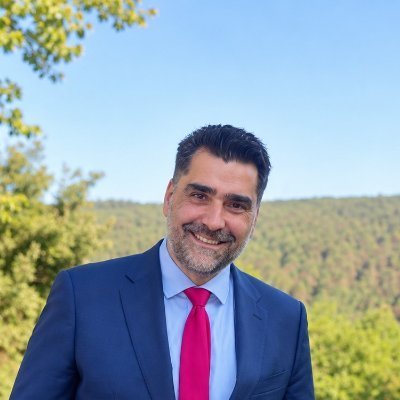
Bernat López is founder and CEO of onext, an AI boutique. He helps development and product teams work with AI with method —specification before building, a person who decides where there is risk and Spec-Driven Development— and applies to his own company what he proposes: onext runs on its own agentic system.
LinkedIn →